

Current State of Corporate Bonds
Discover why emerging market corporate bonds are the standout investment opportunity in 2024. Learn about their higher yields, lower default rates, and how Bondi Finance is democratizing access through tokenization. Unlock higher returns and diversify your portfolio with these compelling assets today. Stay ahead of the curve and seize the opportunities that emerging markets offer.
Emerging market corporate bonds have gained significant attention from investors seeking higher yields and portfolio diversification. Despite perceptions of increased risk due to economic and political volatility, the fundamentals of emerging market (EM) corporations often surpass those of their developed-market counterparts. This article explores the current trends, compares EM bonds with U.S. corporate bonds, and highlights the opportunities they present.
Global Economic Trends Impacting Bonds
Post-Pandemic Monetary Policies
During the COVID-19 pandemic, countries like the United States implemented quantitative easing and economic stimulus measures to mitigate economic contraction caused by lockdowns and capital flight. The U.S. Federal Reserve’s M2 money supply—a measure of all cash in the economy excluding large institutional deposits—increased by 42.2%, from $15.38 trillion at the beginning of 2020 to $21.722 trillion at its peak in April 2022. While this influx of liquidity kept economies afloat, it led to rising inflation.
Rising Interest Rates and the “Soft Landing” Strategy
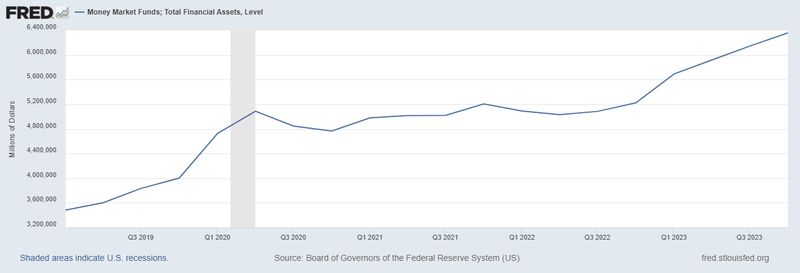
To combat inflation without triggering a recession—a strategy known as a “soft landing”—central banks raised interest rates. In this environment, U.S. Treasury bonds, considered the only “risk-free” U.S. dollar-denominated asset class, began offering investors up to a 5% annual yield on 10-year bonds. This attractive risk-free return shifted capital from equity markets into cash and equivalents like Money Market Funds and U.S. Treasuries. The market capitalization of Money Market Funds grew from $5.03 trillion in 2022 to $6.35 trillion in 2023, an increase of over 26%. However, despite their safety, these returns are modest compared to those from emerging market bonds.
Investment-Grade Emerging Market Bonds
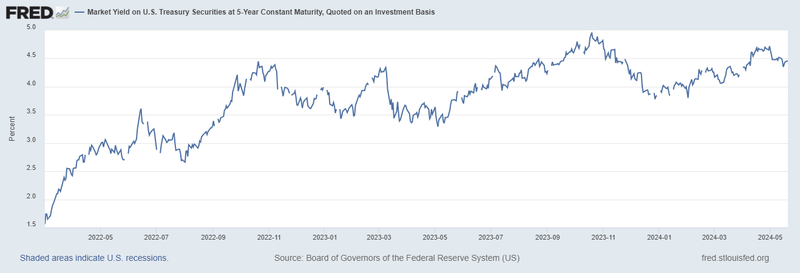
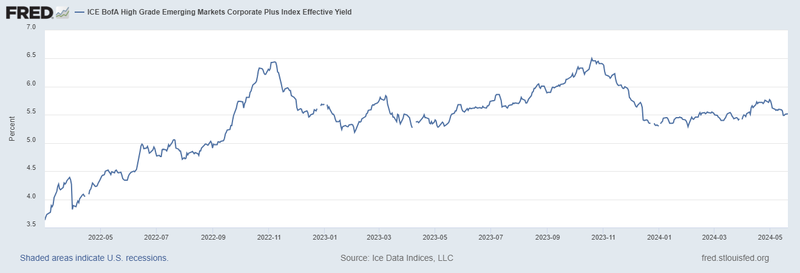
From March 2022 to May 2024, the average yield for 5-year U.S. Treasuries was 3.79% per annum. In contrast, investment-grade emerging market corporate bonds (IGEMCB), listed in the ICE BofA High Grade Emerging Markets Corporate Plus Index, offered an average yield of 5.41%. This represents a substantial 42.7% risk premium over U.S. government debt while maintaining relatively low risk.
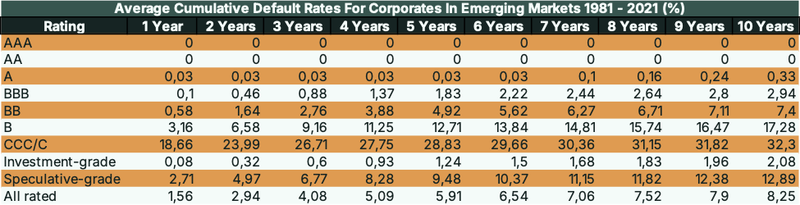
According to Standard & Poor’s, the default rate for investment-grade EM corporate bonds averaged just 0.07% annually and 0.28% over a cumulative two-year period between 1981 and 2023. Notably, no investment-grade corporate bonds in emerging markets defaulted in 2022 and 2023, highlighting their stability.
High-Yield Emerging Market Bonds
High-yield (speculative-grade) EM bonds offered even more attractive returns. From March 2022 to May 2024, the average yield was 10.11%, as reported by the ICE BofA High Yield Emerging Markets Corporate Plus Index. This yield is 86.8% higher than their investment-grade counterparts and 166% higher than 5-year U.S. Treasuries.
While these bonds carry higher risk, the historical default rate remains relatively low. Between 1981 and 2023, the annual default rate for high-yield EM bonds was 2.58%, with a cumulative two-year default rate of 4.97%. Moreover, default rates in 2022 and 2023 were below average, at 2.38% and 2.1% respectively, underscoring their resilience.
Comparing EM Bonds with U.S. Corporate Bonds
Investment-Grade U.S. Corporate Bonds
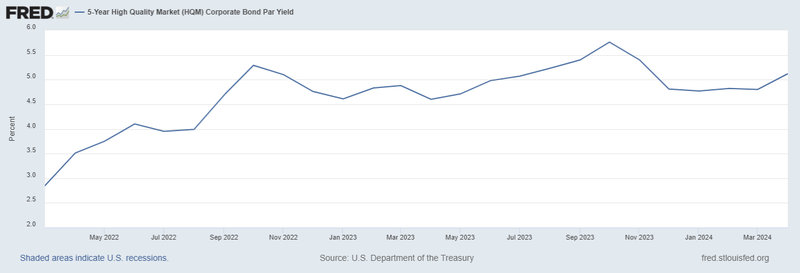
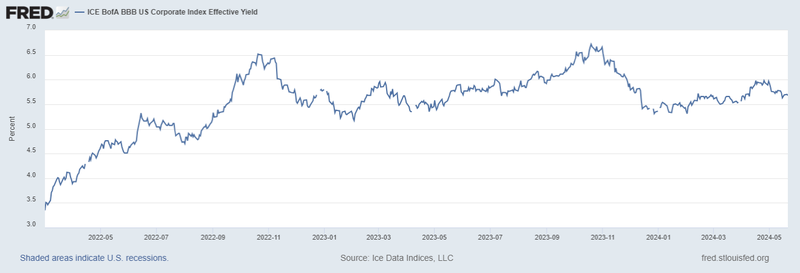
U.S. investment-grade corporate bonds have shown interesting trends. The average 5-Year High Quality Market (HQM) Corporate Bond Par Yield for AAA, AA, and A-rated firms was 4.68% since March 2022. The ICE BofA BBB U.S. Corporate Index, which includes the lowest investment-grade U.S. corporate bonds, returned an average yield of 5.52% during the same period. The combined average yield for U.S. investment-grade corporate debt is 5.1%, slightly less than the 5.41% offered by their EM counterparts.
Historically, U.S. corporations have a higher default rate of 0.11% annually and a 0.28% cumulative two-year default rate, which is 57.1% higher than that of EM corporates. Interestingly, the average credit quality in the U.S. investment-grade bond market has been improving, with a shift from BBB-rated bonds to a higher proportion of A-rated bonds.
High-Yield U.S. Corporate Bonds
High-yield U.S. corporate bonds yielded an average of 8.07% since March 2022, according to the ICE BofA U.S. High Yield Index. This is 20.2% less than the average yield for high-yield EM bonds. Additionally, U.S. high-yield bonds have a higher historical default rate of 3.95% annually and 7.7% over a two-year period since 1981. These rates are significantly higher—by 53% and 54.9% respectively—compared to high-yield EM bonds, making U.S. high-yield bonds riskier despite offering lower returns.
The Rise of Emerging Market Bonds
Economic Resilience and Growth
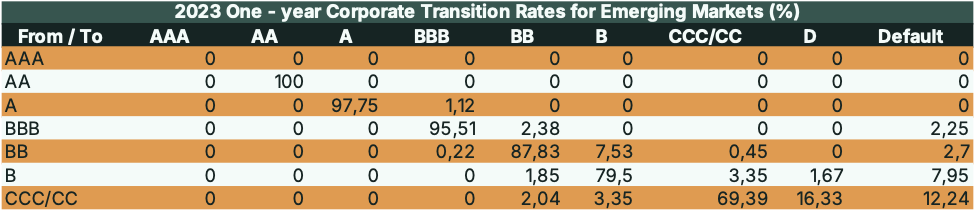
In 2023, credit rating transitions for EM corporate bonds generally trended upwards. A prolonged period of high interest rates did not impede these firms’ ability to meet their obligations. The global economy demonstrated resilience, with an expected growth rate of 3.1% for 2024, matching that of 2023. The OECD unemployment rate remained low at 4.9% in February 2024.
Emerging economies like India, Indonesia, China, and Turkey are driving global growth, each expected to exceed the global average growth rate. Strong economic fundamentals have made EM bonds, particularly high-yield ones, more attractive, leading to their outperformance compared to other bond classes.
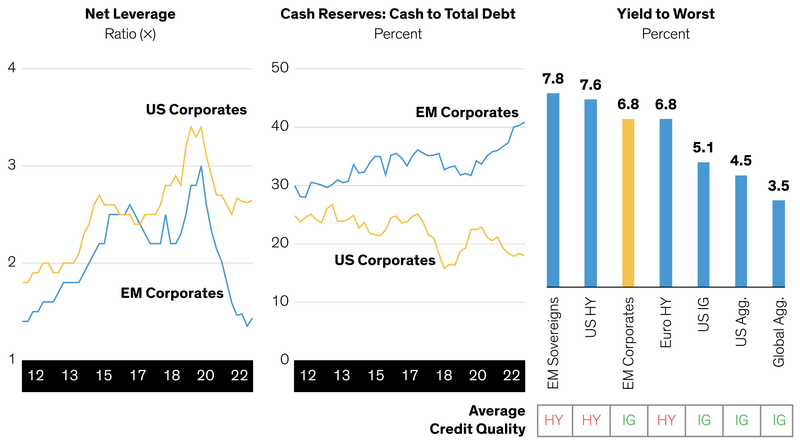
Figure From Alliance Bernstein
Support from International Institutions
The International Monetary Fund (IMF) and other international lenders have supported high-default-risk sovereigns, enhancing liquidity for both sovereign and corporate bonds in these countries. Reforms in nations like Turkey and Argentina are strengthening market fundamentals. As a result, 2024 is poised to be a transformational year with abundant opportunities in bond markets.
Key Takeaways
- Higher Yields: EM corporate bonds consistently offer higher yields compared to U.S. corporate bonds. Investment-grade EM debt yields an average of 6.8%, matching high-yield U.S. corporate debt and exceeding investment-grade U.S. corporate bond yields by nearly two percentage points.
- Lower Default Rates: Despite perceptions of higher risk, EM corporate bonds have lower historical default rates compared to U.S. corporates.
- Stronger Fundamentals: EM corporations often have stronger financial fundamentals, including lower net leverage ratios and higher cash reserves than U.S. counterparts.
Risk Less, Earn More with Bondi Finance
The current cryptocurrency landscape lacks assets that provide stable and high yields. Crypto assets are highly correlated and subject to market sentiment. While lending markets offer avenues to invest stablecoins, their returns are unpredictable and follow general crypto trends.
Tokenization of traditional financial instruments opens up a world of assets independent of crypto market volatility. By tokenizing EM corporate bonds, investors can diversify their portfolios without converting crypto assets to fiat currency. Tokenized treasuries have initiated this process, offering stable yields, but their returns are relatively low and may decrease if the Federal Reserve lowers interest rates.
Emerging market corporate bonds have a proven track record of providing steady cash flow and high yields. However, high investment thresholds have traditionally barred retail investors from accessing this asset class. Bondi Finance aims to democratize finance by simplifying the process of buying EM corporate bonds, lowering barriers to entry, and providing access to high-yield, stable assets.
Conclusion
Emerging market corporate bonds present a compelling opportunity for those seeking higher returns and portfolio diversification. With higher yields, lower default rates, and stronger corporate fundamentals compared to U.S. corporate bonds, EM bonds are an attractive addition to any investment portfolio.
Bondi Finance is at the forefront of this financial revolution, enabling easy access to EM corporate bonds through tokenization. By bridging the gap between traditional finance and the crypto world, Bondi empowers investors to risk less and earn more.
Resources
More from the blog.
All posts
The Reinvestment Vault: How coupons become more bonds
Coupons are the whole point of a bond and the one thing DeFi cannot handle. The Reinvestment Vault keeps the Bond Token a full bond underneath and puts a clean, compounding ERC-20 share on top:…

Introducing the Redemption Vault: From request to cash
A Bond Token keeps everything a bond does, so its exit has to handle everything a bond does. The Redemption Vault gathers exits of any size into one real bond sale through the regulated custody…

Introducing v3: Every change to the Bondi core, and why
Bondi v3 is built on the v2 contracts and closes the gap between a token that pays coupons and a bond: calls, amortizations, a supply that grows, fees taken onchain, proceeds that never pass through…