

Exploring the Bond Market
Deep capital markets are essential for a country's prosperity, distinguishing advanced economies from emerging ones. The governments and businesses utilize debt markets for their funding needs: to provide the required services and to realize their visions.
The debt market mainly refers to the IOU papers called bonds issued by sovereigns or corporates that pay a fixed amount of interest. Investors loan their money to businesses and governments to receive a fixed amount of interest, the coupon, for a predetermined period, the maturity date. Most bonds pay a coupon every six months until the maturity date, at which the investor receives their initial capital, the principal, and the bond's last coupon.
The current bond markets have some challenges to overcome for a stronger future. This article discusses the current state and the ongoing challenges of the bond markets.
The Importance and Challenges of Established Bond Markets
The global bond market, which makes up a sizable portion of the debt securities market globally, was estimated to be between $100 trillion and $129.8 trillion in 2023, comparable in size to both global GDP and the global equities market.12 As of 2024, the international appetite for bonds is growing even faster than before.3
Governments need financing for public infrastructure projects or welfare programs. Frequently, tax revenues are insufficient or ineffectively utilized. Since selling off parts of a country is not feasible, governments turn to debt markets for additional funding. Similarly, corporations constantly need funding to expand their businesses or finance existing operations. They can raise capital by selling a portion of their company or borrowing funds. Selling shares on equity markets, which effectively decreases ownership control and forfeits future potential capital appreciation, is not always preferred. Instead, they may get a loan from a bank or issue corporate bonds. These bonds reduce dependency on banks and diversify the investor base for corporations. The importance of corporate bonds cannot be understated, and we will revisit this topic extensively, comparing them with equity and bank loans in a separate article titled “What Makes Corporate Bonds So Important?”. Depending on macroeconomic conditions, corporate bonds can offer better terms, such as longer-term financing and stable, predictable interest payments.
Historically, the debt market had a limited investor base. The debt markets had included more traditional institutional investors such as central banks, private banks, pension funds, mutual funds, and insurance companies. However, with the advent of globalization, the democratization of finance, and the rise of electronic platforms, retail investors and foreign investors have also become active participants in the debt market. Bondi believes these markets will continue to democratize, with the next major step being the tokenization of debt markets and the broader finance industry. We explored the projected benefits of tokenization for capital markets in our article “Financial Inclusion and the Role of Tokenized Bonds”.
There are still obstacles to completely incorporating retail investors into the debt market. Electronic platforms have multiplied, but they have not yet been able to tap their potential to solve existing problems, such as high search costs and limited access to pricing information. Their main goal has frequently been to increase the efficiency of traditional trading methods for secondary market intermediaries, as noted by the Securities and Exchange Commission (SEC). Especially in corporate bonds, even when retail investors are ready to take on risk in exchange for possibly higher returns, issues like low liquidity in secondary markets, inconsistent taxes on interest income, and high entry and exit expenses have made it difficult for them to participate.4
A developed bond market can be an appropriate route for channelling the savings of retail investors in capital formation. Retail investors are risk-averse, so it makes sense that periodic coupon payments, a known return day for their invested principal, and priority in case of bankruptcy would be desirable for retail investors. If the debt market were as developed as the equity market, retail investors would naturally be drawn to these markets. We believe that there is much to be gained from higher retail participation in debt markets, and that is why we covered this topic, along with the current obstacles, in more detail in our article “Unlocking Retail Potential".
1 - https://www.weforum.org/agenda/2024/03/oecd-government-bonds-and-other-economic-stories-to-read/
2 - https://www.sifma.org/resources/research/fact-book/
Despite these obstacles, it has been shown that non-bank investors have an unsatiated appetite, and democratization makes bond markets healthier.
Research by the Bank for International Settlements through 95 countries over 20 years shows that, for increases in both foreign and domestically held debt, as well as in different subsamples of advanced economies and emerging markets, non-bank private investors have increased their holdings of national debt at considerably greater rates than any other group, including private banks. For example, when there is an increase in debt across all countries, non-bank investors receive 69% of the rise despite their average share being just 46% of holdings. Furthermore, non-bank investors are responsible for 75% of the increase in foreign-held debt but only 42% of all foreign holdings. In contrast, banks only take up 20% of new debt on the margin, absorbing less than their average holdings of sovereign debt, which is 28% on average.
More importantly, according to the same research, emerging economies’ interest payment burden could be alleviated through this democratization by broadening the investor base. In a healthy market with a broad investor base, a 10% increase in debt corresponds to a 6.7% increase in yield for the average EM borrower. However, if non-bank investors are not present and borrowers must borrow from banks, the same 10% increase in debt corresponds to a substantially higher 9.1% increase in yield.5
In addition to governments obtaining more affordable financing, it is equally crucial for businesses to have access to such funding. This fosters an environment where entrepreneurs can establish thriving enterprises, ultimately driving the nations toward prosperity.
Benefits of a Corporate Bond Market
The corporate bond market is quintessential to businesses. Funding is a constant requirement for firms to support ongoing operations or grow their enterprises. In addition to these benefits to investors, deep and liquid corporate bond markets provide numerous, widely acknowledged advantages to firms compared to other alternatives like bank financing:
- Expanded investor base
- Improved risk management
- Reducing currency risk
- Lowering borrowing costs
- Longer-term capital
- Facilitated lending to risky industries
By expanding the pool of potential investors, corporate bonds provide a vital "spare tire" in times of crises when issues with asset quality and liquidity impede bank (re)financing. Capital market funding can bring in creditors who can better meet stable, long-term financing needs—such as sovereign wealth funds, which are not liability-driven, or life insurers and pension funds, which have long-term liabilities of their own and are thus comparatively immune to immediate liquidity pressures. Therefore, the development of the corporate bond market is necessary not only to meet the financing demands of the corporate sector but also to serve as a backup plan in case of a banking crisis.6 7 8
Also, corporate bonds can lower borrowing costs by providing lower interest rates and longer-term financing compared to bank loans. Banks impose much higher interest premiums on loans compared to the bond market. The premium ranges from 140 to 170 basis points for secured term loans to non-investment-grade companies. Lower interest rates can significantly reduce business borrowing costs, particularly over extended periods.9
Furthermore, the corporate bond market supports innovation and entrepreneurship by funding risky businesses. This can lead to the development of new products, services, and technologies, driving economic growth and competitiveness.
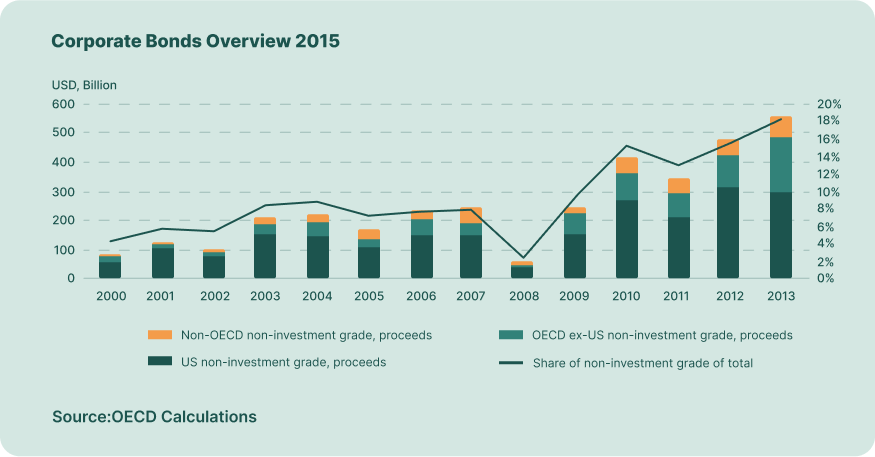
From 2000 to 2013, the nominal size of the non-investment grade bonds rose from $82 billion to $556 billion. The staggering, almost 600% growth evidences how efficiently corporate bond markets can extend funding to riskier businesses. With about $300 billion in non-investment grade bond issuance in 2013, US corporations remain the single largest group of issuers; nevertheless, non-investment grade bond issuance is increasing overall in all other country categories as well. Consistently, with this increase in absolute terms, the proportional worldwide share of non-investment grade bonds has also been rising. In 2000, non-investment grade bonds accounted for around 4% of the overall value of the major corporate bond markets; by 2013, however, they had grown to represent 18% of all money raised through the issuance of corporate bonds.10
Examples of developed bond markets, primarily in advanced economies, unequivocally demonstrate a notable desire for corporate debt instruments, as evidenced by the proportion of outstanding corporate debt relative to the GDP of these economies.11
Unfortunately, the capital markets are not equally developed around the world. While the benefits mentioned above and challenges are common between advanced economies and emerging markets, it's essential to address the specific differences between them to foster a robust global bond market.
9 - Schwert, Michael, Does Borrowing from Banks Cost More than Borrowing from the Market?
Disparities between Advanced Economies and Emerging Markets
Deep capital markets provide a well-balanced mix of corporate and government bond markets. Moreover, the accessibility of different cohorts of investors, from pension funds to retail and foreign investors, is a crucial feature.
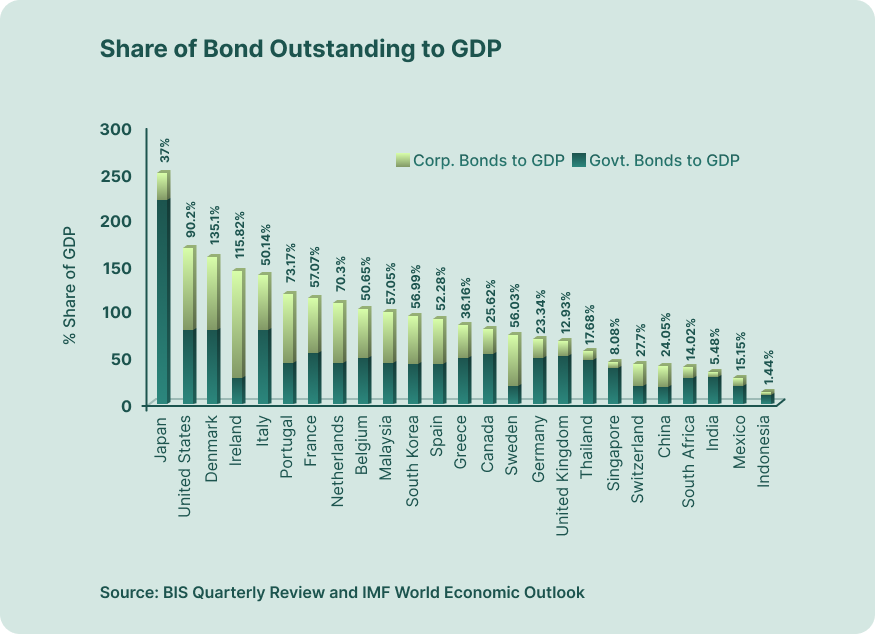
Figure 2 from ASIFMA Paper: India Bond Market Roadmap - October 2013
The right side of the graph in Figure 2 illustrates the shallowness and government bond dominated nature of emerging markets’ debt markets. Malaysia’s and Thailand’s are relatively deep; however, Thailand’s still consists mainly of government bonds, posing a problem.
On the left side of the graph, advanced economies exhibit high indebtedness on top of a vibrant corporate bond market. Switzerland is particularly noteworthy with its shallow bond market, standing as an outlier on the right side of the graph. This is often attributed to an incredible banking and wealth management industry. However, although lacking a deep bond market, it boasts a larger corporate bond market than its government bond market.
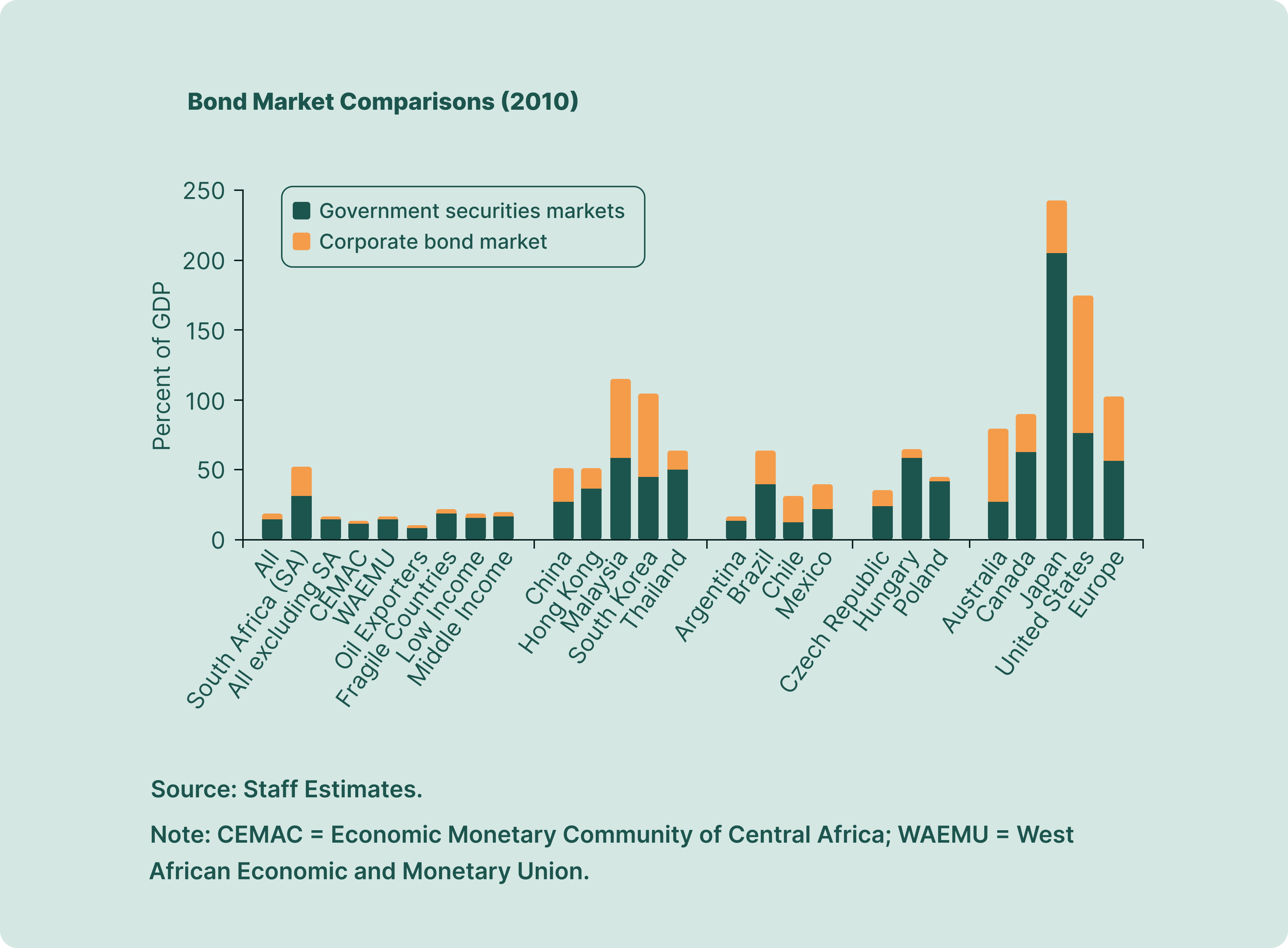
Above, Figure 3 displays a more region-wide picture of financial deepening, evidencing trends highlighted above, comparing similarly government-bond-to-GDP and corporate-bond-to-GDP ratios.
In particular, Africa, the world’s least developed region, could benefit significantly from developed capital markets. However, when compared to other developing and industrialized economies, Africa has the most noticeable lack of financial markets. In 2010, government securities made up just 14.8% of GDP. The discrepancies are even more pronounced when it comes to corporate bonds; the average amount of outstanding bonds stood at 1.8% of GDP, far less than in other developing and rising nations.12
While some emerging market countries, like South Africa, China, Malaysia, and Brazil, have achieved success in developing relatively deep corporate bond markets relative to GDP, corporate bond markets still make up a small portion of bond markets in the majority of emerging and underdeveloped countries.
Check our article "Market Structure and Financial Depth Disparities Among Countries" for a deep dive into this!
These differences and the lagging development of bond markets in emerging nations can be attributed to the numerous persisting challenges.
Challenges of the Bond Markets in Emerging Markets
Emerging nations face significant challenges in developing their domestic debt markets. These obstacles are mainly the following13:
- Unfavorable tax treatment for bond investments
- Inadequate disclosure of financial information for corporate bonds
- Deficiencies in corporate governance and accounting standards
- Low liquidity
- Small issuance sizes
- OTC trading
- Narrow investor base
- Private placements
Regulatory obstacles provide difficulties since robust frameworks for bankruptcy and debt restructuring are required to sustain a thriving corporate bond market and reduce systemic default risks. In addition, market dynamics are complicated, and transaction costs for issuers and investors are elevated due to the absence of standardization in corporate bond issues.14
Moreover, corporate bond trading lacks transparency, as it is done bilaterally and over-the-counter (OTC). The issuance in these markets often relies on syndication rather than auctions, further limiting liquidity.
For example, as of 2012, the People's Republic of China's bond market was mostly made up of exchange and interbank bond markets. Qualified Foreign Institutional Investors and other small and medium-sized institutional investors trade on the exchange bond market, which is essentially a retail market. Conversely, the interbank bond market functions as an over-the-counter wholesale market, where institutional investors engage in market positioning and trade one-to-one based on quotes. Roughly 94% of the value of outstanding bonds and 99% of the volume of bond trading is accounted for by the interbank bond market.15
Other problems preventing a better integration of a broad investor base, including retail investors, persist as well. There is a general feeling that the current public issue requirements are too onerous, counter-productive and time consuming. Therefore, in most of the emerging and underdeveloped economies, private placement route is still preferred by most corporate bond issuers.
Private placements lack the transparency and statutory disclosure obligations associated with public offerings; however, as a significant market share is dominated by a select group of institutional repeat players, dynamics are influenced more by mutual trust and reputational factors. Lack of standardization and overall opaqueness could be attributed to private placements to some extent. Also, since the privately placed bonds are essentially hold by the investors till their maturity, it fails to provide necessary liquidity in the secondary market, significantly affecting the growth of the emerging and underdeveloped countries’ corporate debt markets.16
Privately placed bonds made up 90% of the corporate bond supply in Vietnam in 202217, a stark contrast to the norms in most developed markets. In 2019, private placements accounted for only 12% in the US, 10% in Germany, and 0.4% to 15% in South Korea.18
17 - https://www.ifre.com/story/3834848/vietnam-eases-bond-measures-whnzg5jqgy
18 - MB Securities Joint Stock Company, Vietnam Bond Market In the Readiness for Further Growth
Conclusion
First, Bondi will bring high-yield emerging market corporate bonds to the masses onchain, eliminating the industry's prevailing opacity through blockchain technology.
And we won’t stop there—so much more to come!
Read our blog post on our Loyalty Program to be part of this journey.
More from the blog.
All posts
The Reinvestment Vault: How coupons become more bonds
Coupons are the whole point of a bond and the one thing DeFi cannot handle. The Reinvestment Vault keeps the Bond Token a full bond underneath and puts a clean, compounding ERC-20 share on top:…

Introducing the Redemption Vault: From request to cash
A Bond Token keeps everything a bond does, so its exit has to handle everything a bond does. The Redemption Vault gathers exits of any size into one real bond sale through the regulated custody…

Introducing v3: Every change to the Bondi core, and why
Bondi v3 is built on the v2 contracts and closes the gap between a token that pays coupons and a bond: calls, amortizations, a supply that grows, fees taken onchain, proceeds that never pass through…